
How to plan a successful event: transport, decor and floral arrangements
Practical guide to planning a successful event: guest transportation, supplier coordination, decor and floral arrangements.
How to plan a successful event: transport, decor and floral arrangements
A successful event is not only seen in the final photos, but felt throughout the day. The guests arrive without haste, the hosts do not look for last-minute solutions, and the decor seems naturally integrated into the chosen space. Whether we are talking about a christening, a family anniversary, a small wedding or a party with guests from several areas, good organization starts with a simple question: how will the day actually go?
In practice, most tensions arise from details considered minor: the actual travel time, the place where the flowers are unloaded, the time at which the decoration is set up, the space for photos, the distance between the church, restaurant and home. When these elements are put on paper ahead of time, the event gains momentum. When left for the last few days, each delay is passed on like a domino.
Planning does not mean turning an important day into a rigid schedule. It means creating enough order that emotional moments happen without unnecessary interruptions. Transport, decoration and flowers are three areas that influence each other more than it seems at first glance.
Decision calendar: what needs to be decided before the aesthetic details
The first useful step is to establish the fixed milestones: the date, the time of the ceremony, the time of the reception, the approximate number of guests and the spaces involved. Only then does it make sense to discuss colors, types of flowers, vases, candles, bouquets or decorative areas. The reason is simple: the decor must suit not only the tastes of the hosts, but also the schedule and itinerary of the day.
For example, a baptism with a ceremony in the morning and a party at noon has a different rhythm than one that begins in the afternoon and continues into the evening. Flowers mounted too early in a warm space may need extra attention. Bouquets to be photographed before departure must be ready at a precise time. A large table arrangement is not only chosen according to the inspiration image, but also according to the width of the table, the height of the room and the type of service.
Realistic planning also includes discussions about access. Who can enter the venue? At what time? Is there a lift, ramp, temporary parking space or drop-off area? These are apparently administrative questions, but they decide whether the scenery ends up being assembled calmly or hastily, with adjustments made on the spot.
Christening flower arrangements: how to choose a coherent direction
At a baptism, flowers have a special role: they mark a family moment, but they must remain delicate, bright and adapted to the context. The choice of some baptism floral arrangements it usually starts from the desired atmosphere: classic, natural, pastel, modern or discreetly festive. The visual direction should be the same in the church, in the reception area and on the guests' tables, even if the proportions differ.
A common mistake is to load all areas in the same way. An elegant event does not need flowers everywhere, but well-placed accents. The parents' table, the entryway, the baptismal font, the baptismal candle, the candy bar table or the photo area can be treated differently, but there must be a connection between them. This connection can come from the color palette, from the texture of the leaves, from the type of vessels, or from a certain style of composition.
Before choosing the flowers, it is worth analyzing the space where they will be photographed. A room with colored walls, mirrors or warm light changes the perception of shades. A white and green decor may look airy in a garden, but too cold in a very large hall. Shades of cream, pale pink, blue, peach or fresh green behave differently depending on the light, and this is especially important in family photos.
Transporting guests and materials: the invisible part of the organization
Transportation is rarely the romantic part of an event, but it is one of the most important. If the guests are late, if the parents arrive at a different place than the photographer, or if the flowers cannot be unloaded close to the entrance, the schedule is compressed. And when the schedule is compressed, the hosts end up giving up the very moments for which they planned the event: quiet photos, welcoming the guests, a few minutes of respite between the ceremony and the party.
For events with multiple locations, a simple route outline is helpful. Addresses, estimated travel time, margin for traffic, parking spaces and the person who answers the phone at each point are noted. If there are elderly guests or families with small children, a more convenient access option should also be considered. A short route on the map can become tiring if it involves a lot of walking, stairs or impromptu stops.
The transport of decorative materials must be handled separately from the transport of guests. Flowers, stands, vases and accessories usually don't fit in a car already full of luggage, clothes and gifts. For sensitive arrangements, temperature, stability and time spent on the road matter. A mature planning asks ahead of time who brings what, who takes over, who sets up and who collects at the end.
The floral decor is not chosen separately from the room
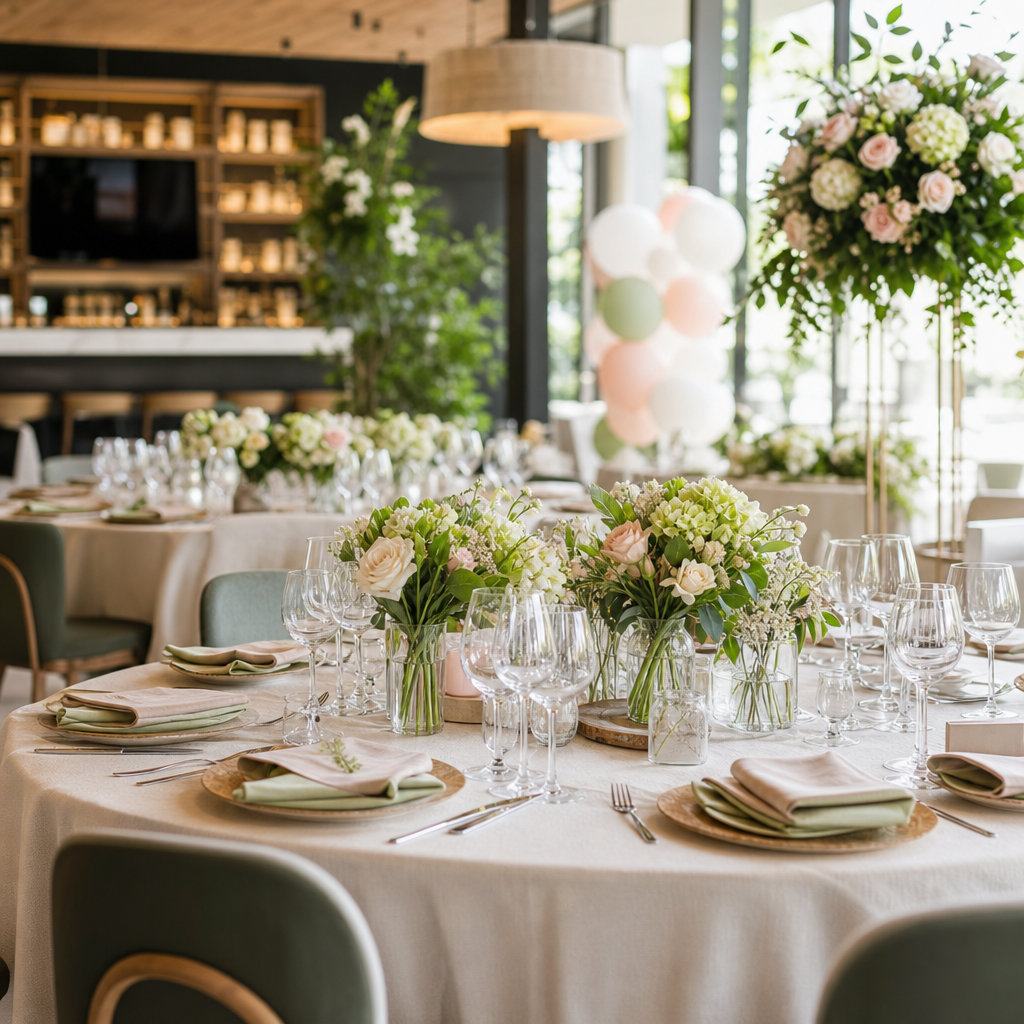
Floral decor looks best when it looks made for the place, not just brought there. In a room with round tables, centerpieces can create balance, but must allow guests to see each other. In a long space with rectangular tables, a sequence of low compositions with repeated accents may work better. In a restaurant with a lot of wood, very cold flowers can appear stiff, while natural tones and textured greens can warm the picture.
It is recommended that hosts send actual location photos to suppliers, not just inspiration images. A photo taken with the phone, in ordinary room light, often says more than a perfect collage on the Internet. The color of the chairs, the type of tablecloths, the space between the tables, the place where a decorative panel could sit and the areas that must be left free for serving are noted.
For local events, including those organized near the city or in towns bordering the Capital, the advantage of coordinating with suppliers who know the rhythm of the area can be practical: more predictable times, clearer discussions about delivery and better adaptation to real routes. The choice of bouquets of flowers for events in Bragadiru can be part of this logic of proximity, especially when the bouquets have to arrive fresh and on time on a day with a tight schedule.
Bouquets: small details that appear in the most important photos
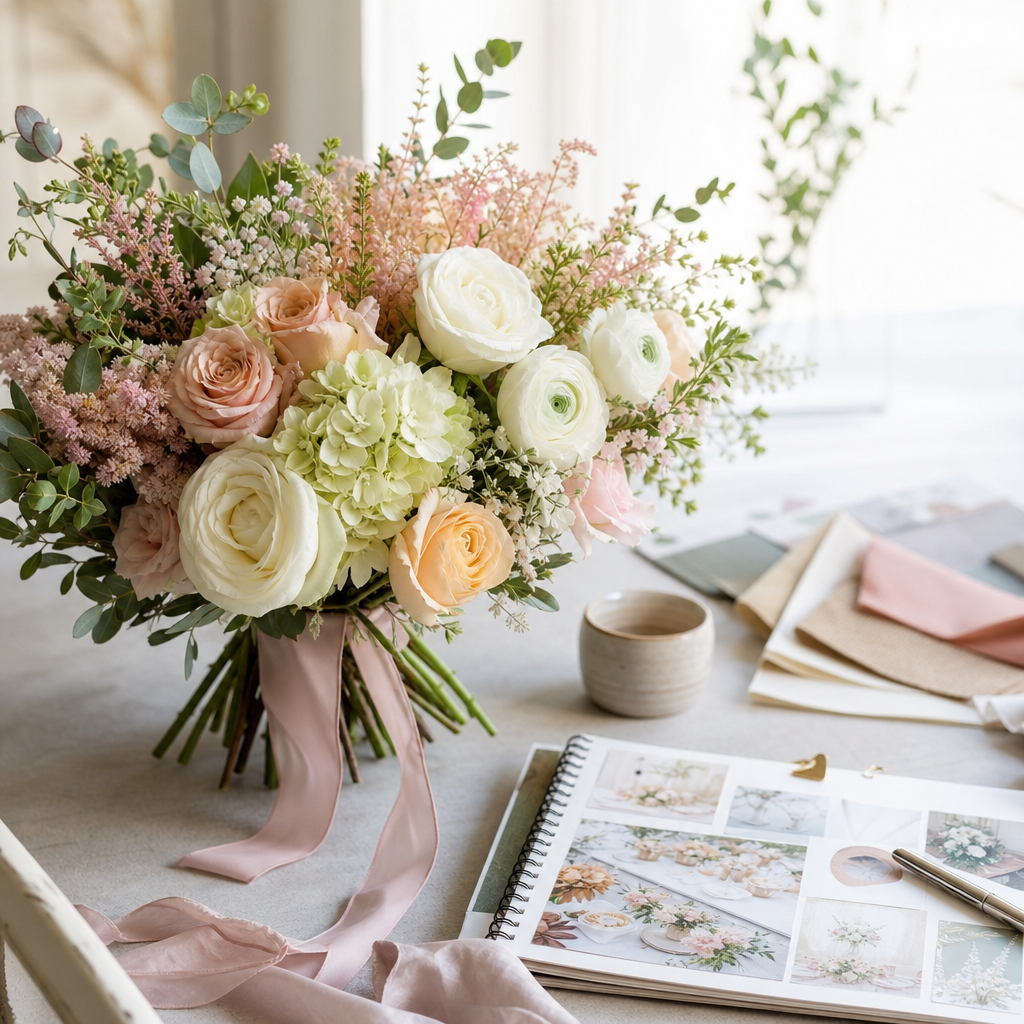
Bouquets are often seen as secondary elements to large arrangements, but they appear in many of the important frames: when leaving home, next to parents, in group photos, when receiving guests or in spontaneous images at the table. For this reason, they must be chosen with the same care as the main decor.
A suitable bouquet is not necessarily spectacular in size. It must be comfortable to hold, proportionate to the person wearing it and harmonious with the outfit. For the godmother, mother or other close people, the bouquet can have a distinct touch, but it should not completely break the palette of the event. In photos, too strong color differences attract the eye and can clutter the visual composition.
Another important detail is resistance. If the bouquet will be used over several hours, the flowers must withstand handling, movement and temperature changes. It is useful for the hosts to say in advance when and where the bouquet will be used: only at the ceremony, and at the photo session, or throughout the event. This information may change the recommended type of flowers and the way of binding.
Communication with suppliers: short brief, clear answers
A good brief saves everyone time. It doesn't have to be a complicated document, but a list of essential information: event date, locations, times, number of tables, contact person, color preferences, indicative budget and some visual examples. When these data are missing, discussions become long and unclear, and decisions are delayed.
It is important that the hosts also say what they do not want. Sometimes a negative wording helps more than an inspiration album: we don't want very busy decor, we don't want heavily scented flowers on the tables, we don't want tall arrangements that block the conversation, we don't want very loud colors. These boundaries provide direction and reduce the risk of inappropriate proposals.
At the same time, suppliers should be asked about the practicalities, not just the aesthetics. Who is in charge of the installation? How long does it take? What happens if access to the gym is later? How are the bouquets delivered? What items must be returned? Who needs to be available on the day of the event? The answers to these questions may seem technical, but they support the elegance of the whole day.
The budget: how to divide resources without losing the visual effect
The decor and flower budget should be viewed as a prioritization tool, not a bucket list. In many cases, better visual impact is achieved by concentrating flowers in a few key areas, rather than spreading them thinly throughout. A well-thought-out entrance, a coherently decorated main table and a few table settings can have a more elegant effect than many small, unrelated elements.
Hosts should decide which areas will appear most often in photos. If the ceremony is important, there deserves a more visible floral accent. If the party has a moment of receiving guests, the entrance area can become essential. If the family wants photos at the table, the central compositions must be carefully thought out. The budget follows the path of the gaze: where do people look and where does the camera stop?
An honest discussion about the budget also helps in choosing seasonal flowers, suitable sizes and mounting solutions. Not every arrangement needs to be extravagant. Sometimes texture, proportion and understated repetition create more refinement than abundance.
Common mistakes on the day of the event
One of the most common mistakes is not having a contact person who is not the main host. On the day of the event, parents, godparents or family organizers are caught up in emotions, phone calls, greetings and photos. If every supplier calls the same person, they tire quickly and may miss important information. A calm and available liaison person can resolve many situations without drama.
The second mistake is too tight schedule. If between two moments there is only the ideal travel time, without any reserve, any traffic light, rain or delay changes everything. For family events, a margin of 15-20 minutes between important milestones can save the atmosphere. It is better for guests to wait a few minutes in a prepared space than for everyone to run from place to place.
The third mistake is neglecting the ending. Who collects the decor? Who takes home the bouquets? What happens to rented vases, stands or items? At the end of a long day, these questions become urgent. If they are set in advance, the hosts can leave in peace and the suppliers can finish their work without confusion.
FAQ: useful questions before choosing flowers and decor
How far in advance should flowers be discussed for a christening?
It is prudent for the discussion to begin after the date, location, and time of the ceremony have been determined. For an event with multiple decorated areas, it's helpful to have time to clarify the palette, access, set-up and delivery. Even when the final decision is made closer to the event, the general direction must be set in advance.
Is it better to choose the flowers or the theme of the event first?
The theme and space should be decided before the flowers. The flowers then come to support the atmosphere, not compete with it. If the room already has strong colors or a well-defined style, the arrangements should be adapted to complement the existing decor.
How do you keep tables from looking too busy?
Through correct proportions and respecting the function of the table. Arrangements should not block the view, occupy the serving space or make the guests uncomfortable. Sometimes low, rhythmically repeated compositions are more effective than high and bulky pieces.
A practical note for local events
In organizing an event, the difference between a beautiful day and a tiring one often lies in things that are not seen in the setting: confirmed delivery time, verified route, a phone number at hand, a table left free for set-up, a person who knows where each element should be placed. Flowers can set the mood, but logistics allow them to look good at the right time.
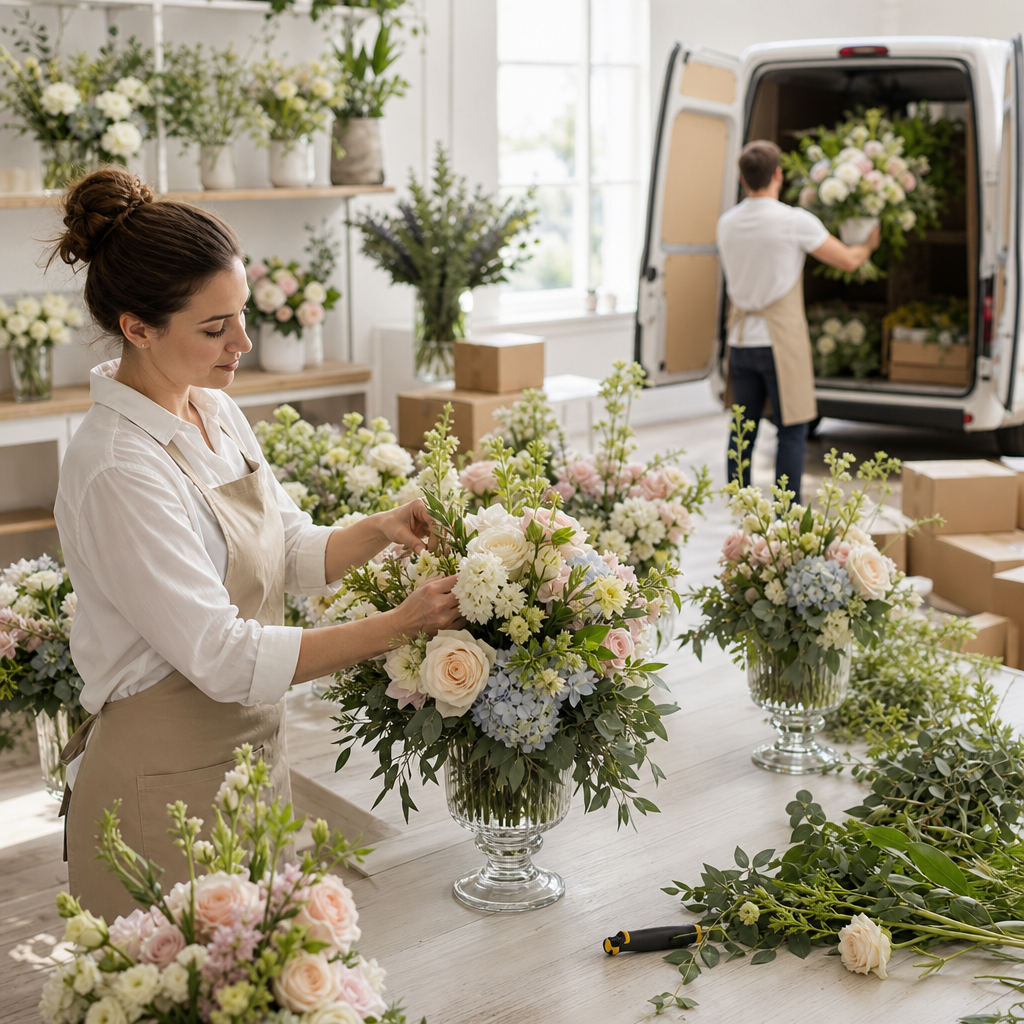
For hosts planning a christening or family party, the most helpful immediate step is to jot down the day's itinerary, decorated spaces, and when flowers appear in photos on a single page. With this page in front, the discussion with suppliers becomes shorter, clearer and closer to the reality of the event.